
Hyundai i30 (PD): Why didn't my air bag go off in a collision? / Air bag inflation conditions
Front air bags
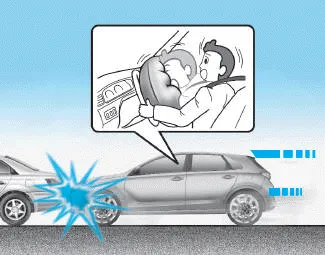
Front air bags are designed to inflate in a frontal collision depending on the severity, speed or angles of impact of the front collision.
Side and curtain air bags


Side and curtain air bags are designed to inflate when an impact is detected by side collision sensors depending on the severity, speed or angles of impact resulting from a side impact collision.
Although the driver’s and front passenger’s air bags are designed to inflate in frontal collisions, they also may inflate in other types of collisions if the front impact sensors detect a sufficient impact. Side and curtain air bags are designed to inflate in side impact collisions, but they may inflate in other collisions if the side impact sensors detect a sufficient impact.
Also, the side and curtain air bags are designed to inflate when a rollover is detected by a rollover sensor. (if equipped with rollover sensor)
If the vehicle chassis is impacted by bumps or objects on unimproved roads, the air bags may deploy. Drive carefully on unimproved roads or on surfaces not designed for vehicle traffic to prevent unintended air bag deployment.
WARNING To reduce the risk of an air bag deploying unexpectedly and causing serious injury or death: Do not hit or allow any objects to impact the locations where air bags or sensors are installed.
In certain low-speed collisions the air bags may not deploy. The air bags are designed not to deploy in such cases because they may not provide benefits beyond the protection of the seat belts.
Other information:
Hyundai i30 (PD) 2018-2024 Owner's Manual: Wheel alignment and tyre balance
The wheels on your vehicle were aligned and balanced carefully at the factory to give you the longest tyre life and best overall performance. In most cases, you will not need to have your wheels aligned again. However, if you notice unusual tyre wear or your vehicle pulling one way or the other, the alignment may need to be reset.
Hyundai i30 (PD) 2018-2024 Owner's Manual: Exterior care
Exterior general caution It is very important to follow the label directions when using any chemical cleaner or polish. Read all warning and caution statements that appear on the label. Finish maintenance Washing To help protect your vehicle’s finish from rust and deterioration, wash it thoroughly and frequently at least once a
Categories
- Manuals Home
- Hyundai i30 Owners Manual
- Specifications & Consumer information
- Instrument cluster
- Convenient features of your vehicle
- New on site
- Most important about car
