
Hyundai i30 (PD): Maintenance / Engine oil
Checking the engine oil level
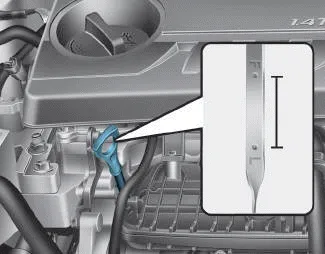
1. Be sure the vehicle is on level ground.
2. Start the engine and allow it to reach normal operating temperature.
3. Turn the engine off and wait for a few minutes (about 5 minutes) for the oil to return to the oil pan.
4. Pull the dipstick out, wipe it clean, and re-insert it fully.
5. Pull the dipstick out again and check the level. The level should be between F (Full) and L (Low).
6. If it is near or at L, add enough oil to bring the level to F.
WARNING
Radiator hose
Be very careful not to touch the radiator hose when checking or adding the engine oil as it may be hot enough to burn you.
NOTICE
- Do not overfill the engine oil. It may damage the engine.
- Do not spill engine oil, when adding or changing engine oil. If you drop the engine oil on the engine room, wipe it off immediately.
- When you wipe the dipstick, you should wipe it with a clean cloth. When mixed with debris, it can cause engine damage.
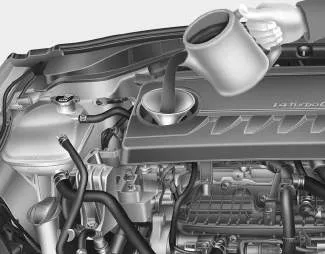
Use only the specified engine oil.
Checking the engine oil level (Diesel engine)


1. Be sure the vehicle is on level ground.
2. Start the engine and allow it to reach normal operating temperature.
3. Turn the engine off and wait for a few minutes (about 5 minutes) for the oil to return to the oil pan.
4. Pull the dipstick out, wipe it clean, and re-insert it fully.
5. Pull the dipstick out again and check the level.
6. The level should be in the C range. If the level is in the D range, add enough engine oil to bring the level up to the C range.
WARNING
Radiator hose
Be very careful not to touch the radiator hose when checking or adding the engine oil as it may be hot enough to burn you.
NOTICE
- Do not spill engine oil, when adding or changing engine oil. If you drop the engine oil on the engine room, wipe it off immediately.
- When you wipe the oil level gauge, you should wipe it with a clean cloth. When mixed with debris, it can cause engine damage.

â– 1.6 TCI

â– Smartstream D1.6
If it is near or at L, add enough oil to bring the level to F. Do not overfill.
Use only the specified engine oil.
Checking the engine oil and filter

We recommend that the engine oil and filter be replaced by a HYUNDAI authorised repairer.
WARNING
Used engine oil may cause irritation or cancer of the skin if left in contact with the skin for prolonged periods of time. Used engine oil contains chemicals that have caused cancer in laboratory animals. Always protect your skin by washing your hands thoroughly with soap and warm water as soon as possible after handling used oil.
Engine oil and filter The engine oil and filter should be changed at the intervals specified in the maintenance schedule. If the vehicle is being driven in severe conditions, more frequent oil and filter changes are required.
The high-pressure cooling system has a reservoir filled with year-round antifreeze coolant. The reservoir is filled at the factory. Check the antifreeze protection and coolant concentration level at least once a year, at the beginning of the winter season, and before travelling to a colder climate.
Other information:
Hyundai i30 (PD) 2018-2024 Owner's Manual: Limitations of the system
The LDW system may operate prematurely even if the vehicle does not depart from the intended lane, OR, the LDW system may not warn you if the vehicle leaves the intended lane under the following circumstances: When the lane and road conditions are poor It is difficult to distinguish the lane marking from the road surface or t
Hyundai i30 (PD) 2018-2024 Owner's Manual: To convert to Cruise Control mode
The driver may choose to only use the conventional Cruise Control mode (speed control function) by doing as follows: 1. Turn the Smart Cruise Control System on (the cruise indicator light will be on but the system will not be activated). 2.
Categories
- Manuals Home
- Hyundai i30 Owners Manual
- Scheduled maintenance services
- LKA system operation
- Your vehicle at a glance
- New on site
- Most important about car
