
Hyundai i30 (PD): Where are the air bags? / Side air bags
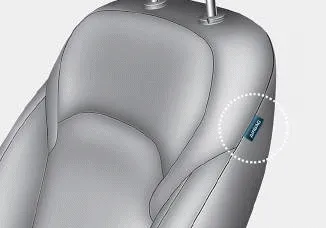
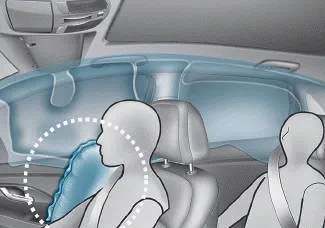
Your vehicle is equipped with a side air bag in each front seat. The purpose of the air bag is to provide the vehicle’s driver and the front passenger with additional protection than that offered by the seat belt alone.
The side air bags are designed to deploy during certain side impact collisions, depending on the crash severity, angle, speed and point of impact.
The side air bags on both sides of the vehicle are designed to deploy when a rollover is detected by a rollover sensor. (if equipped with rollover sensor)
The side air bags are not designed to deploy in all side impact or rollover situations.
WARNING
To reduce the risk of serious injury or death from an inflating side air bag, take the following precautions:
- Seat belts must be worn at all times to help keep occupants positioned properly.
- Do not allow passengers to lean their heads or bodies onto doors, put their arms on the doors, stretch their arms out of the window, or place objects between the doors and seats.
- Hold the steering wheel at the 9 o’clock and 3 o’clock positions, to minimise the risk of injuries to your hands and arms.
- Do not use any accessory seat covers.This could reduce or prevent the effectiveness of the system.
- Do not hang other objects except clothes. In an accident it may cause vehicle damage or personal injury especially when air bag is inflated.
- Do not place any objects over the air bag or between the air bag and yourself. Also, do not attach any objects around the area the air bag inflates such as the door, side door glass, front and rear pillar.
- Do not place any objects between the door and the seat. They may become dangerous projectiles if the side air bag inflates.
- Do not install any accessories on the side or near the side air bags.
- Do not cause impact to the doors when the ignition switch is in the ON position or this may cause the side air bags to inflate.
- If the seat or seat cover is damaged, we recommend that the system be serviced by a HYUNDAI authorised repairer.
Driver’s and passenger’s front air bags Your vehicle is equipped with a Supplemental Restraint System (SRS) and lap/shoulder belts at both the driver and passenger seating positions.
Curtain air bags are located along both sides of the roof rails above the front and rear doors. They are designed to help protect the heads of the front seat occupants and the rear outboard seat occupants in certain side impact collisions.
Other information:
Hyundai i30 (PD) 2018-2024 Owner's Manual: Jack and tools
(1) Jack handle (2) Jack (3) Wheel nut wrench The jack, jack handle, and wheel nut wrench are stored in the luggage compartment under the luggage box cover. The jack is provided for emergency tyre changing only. Turn the winged hold down bolt counterclockwise to remove the spare tyre.
Hyundai i30 (PD) 2018-2024 Owner's Manual: Specifications & Consumer information
Dimensions, Engine, Bulb wattage Dimensions *1 : with roof rack *2 : with outside mirror Engine Bulb wattage *1 : Fastback *2 : Fastback (N Line) Tyres and wheels Full size tyre *1 : In order to drive at high speed(over 100mph or 160km/h) where the speed is lega, adjust tyre pressure as shown in above table.
Categories
- Manuals Home
- Hyundai i30 Owners Manual
- Low tyre pressure telltale
- Brake/clutch fluid
- Your vehicle at a glance
- New on site
- Most important about car
